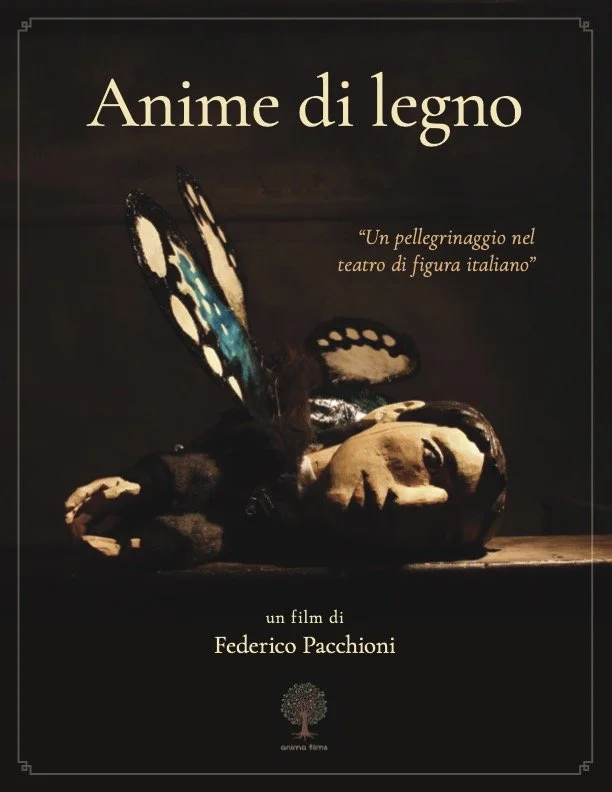
Anime di legno | Wooden Souls
A pilgrimage through contemporary puppet theater in Italy. Anime di legno journeys across Italy to meet the artists and artisans who continue to renew the art of puppetry. Along the way, the film reveals the intimate relationship between performers and their animated objects, tracing the roots of inspiration and the enduring force that keeps this ancient yet vital art form alive.
The Image of the Puppet in Italian Theater, Literature and Film
With the advancement of avatars, animation, virtual reality, and artificial intelligence a thorough understanding of how the puppet metaphor originates from specific theatrical practices and media is especially relevant today. This book identifies and interprets the aesthetic and cultural significance of the different traditions of the Italian puppet theater in the broader Italian culture and beyond. Grounded in the often-overlooked history of the evolution of several Italian puppetry traditions, this study examines a broad spectrum of visual, cinematic, and literary texts representative of the functions and themes of the puppet. A systematic analysis of the meanings ascribed to the idea and image of the puppet provides a unique vantage point to observe the perseverance and transformation of its deeper associations, linking premodern, modern, and contemporary contexts.
*Winner of the 2020 Jury Award of Premio Cibotto and of the Union Internationale de la Marionnette’s Nancy Staub 2024 Award For Excellence in Publications on the Art of Puppetry.
Inspiring Fellini. Literary Collaborations behind the Scenes
Federico Fellini is considered one of the greatest cinematic geniuses of our time, but his films were not produced in isolation. Instead, they are the results of collaborations with some of the greatest scriptwriters of twentieth-century Italy. Inspiring Fellini re-examines the filmmaker's oeuvre, taking into consideration the considerable influence of his collaborations with writers and intellectuals including Pier Paolo Pasolini, Ennio Flaiano, Tullio Pinelli, and Andrea Zanzotto. Author Federico Pacchioni provides a portrait of Fellini that is more complex than one of the stereotypical solitary genius, as he has been portrayed by Fellini criticism in the past.
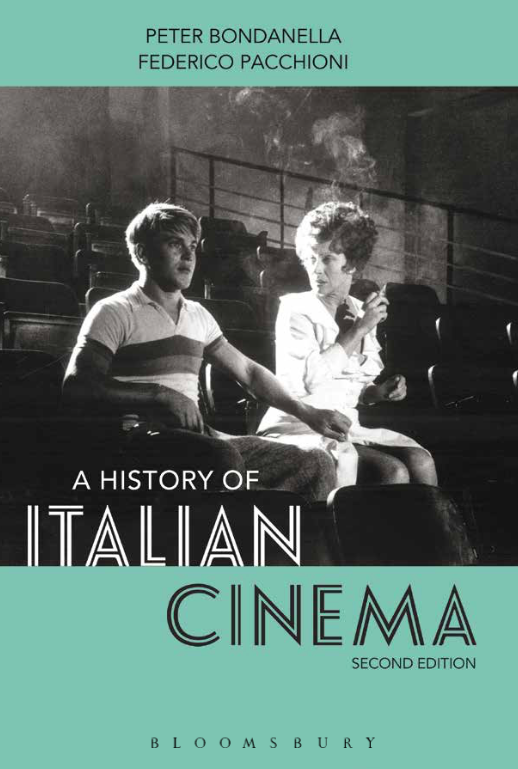
A History of Italian Cinema
Co-authored with Peter Bondanella
Building on decades of research, Peter Bondanella and Federico Pacchioni have reorganized this history to reflect both recent developments in Italian cinema and shifting directions in Italian film studies. The new edition updates the account from the birth of cinema to the present with a revised filmography and expanded discussion of melodrama, crime film, and historical drama. It also includes a newer generation of directors and gives greater attention to themes such as gender, immigration, and media politics. The volume remains broad in scope and is illustrated throughout.
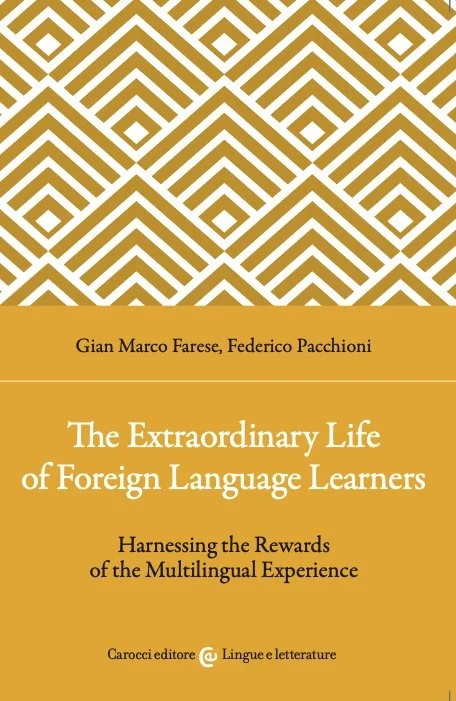
The Extraordinary Life of Foreign Language Learners
Co-authored with Gian Marco Farese
Learning a foreign language is like going on a trip; all you need is to choose your destination. What is the point of learning foreign languages? Which transformations do foreign language learners undergo? What are the benefits of becoming multilingual speakers and intercultural mediators? These and many other questions are answered in this book. Written for those who approach the study of foreign languages for the first time and intend to become intercultural mediators, it unveils the richness of the multilingual experience. Containing a wide range of linguistic examples and inspiring life experiences, the volume combines theoretical notions with practical advice to help you make the most of your foreign language learning experience. It will be an indispensable tool throughout your linguistic journey.
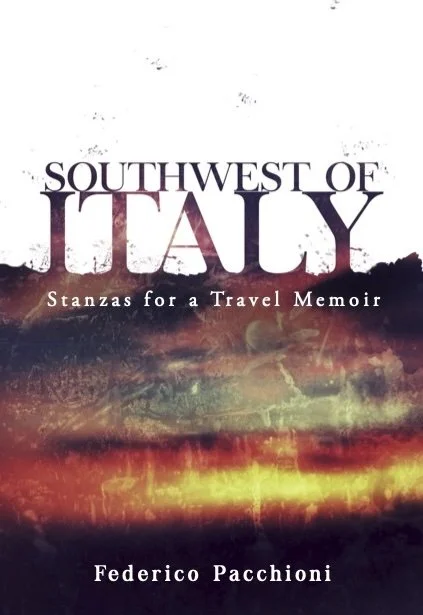
Southwest of Italy. Stanzas for a Travel Memoir
Southwest of Italy: Stanzas for a Travel Memoir traces the author’s journey from his home in Italy to the island of Sardinia, off the southwestern coast of the Italian peninsula, and then southwestward to the United States—first in Texas, then Arizona and finally California. Southwest is here “at once place and direction,” and the journey is both an external and an internal one, layering time, culture, and dreams in a travel narrative rich with sensory language.
I frutti del mio giardino
“A gaze that is at once loving and open to everything, yet capable of remaining firmly rooted in the depths of his own experience, makes Pacchioni’s poetry a rare blend of disarming, immediate emotional sincerity and careful artistic craftsmanship. I frutti del mio giardino thus becomes the reality of a corner of America, transformed into an open center of the world, a refuge of domestic peace, but also a call to be fruitful, to not let our role in the world turn us into a “heart in an empty lane” (Domenico Napoletani, Afterword).
La paura dell’amore
Pacchioni’s poetry “is not easily boxed within a specific tendency of contemporary poetry . . . it turns upon itself and reflects on the lyrical gesture of poetry itself. Pacchioni’s poetry moves between the concreteness of everyday life – which inevitably contains the temptation for allegory underpinning the verses – and the abandonment with full force into the osmotic fluidity of the world. . . In this abandonment, La paura dell’amore, surpasses itself and offers itself as the refinement of an experience in the name of poetry” (Ernesto Livorni, Preface).